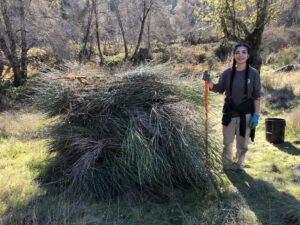
Many thanks to all the amazing WCCA volunteers who show up to help the watershed day after day, and have fun together at the same time! Here are a couple of photos from our recent success removing over 100 invasive Spanish broom plants from the Wolf Creek floodplain at the Roy Peterson Wolf Creek Preserve. We planted native milkweed seeds in their wake, and are pleased to have prevented hundreds of thousands of broom seeds from being produced next year, following Wendell Berry’s advice to “Do unto those downstream as you would have those upstream do unto you!”
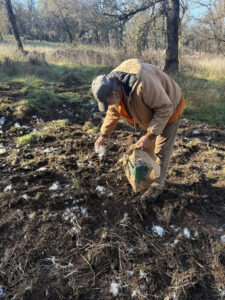

Much gratitude to the Rose Foundation for Communities and the Environment for funding some of our stewardship work parties at the Roy Peterson Wolf Creek Preserve through their California Wildlands Grassroots Fund; to the State Water Board for financing other work parties at the Preserve with SEP funds; and to the Peterson family for their continued generous support. Our work would not be possible without the kindness of funders like these, and all of our wonderful donors, sponsors, and volunteers!

To join the fun at our next stewardship work party, please email kristen@wolfcreekalliance.org.


Each September, Wolf Creek Community Alliance collaborates with the South Yuba River Citizen’s League (SYRCL), and the State of California to participate in an amazing river, stream, and oceans clean-up. We are immensely grateful for the nearly 50 volunteers at two WCCA cleanup sites who helped haul a vehicle transmission case and a truckload of scrap metal out of culverts, rescued recyclables from roadsides, eliminated wildlife-endangering micro-trash from the Wolf Creek Trail, and filled waste buckets full with plastic, tech waste, and more. It is tremendously satisfying to know that all of that trash was prevented from entering Wolf Creek, and to see how much a small, committed group of people can accomplish in a single morning, while thoroughly enjoying each other’s company. Thank you, watershed heroes!

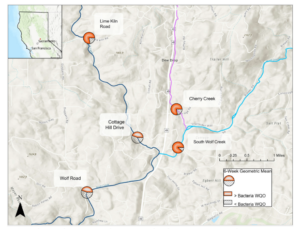
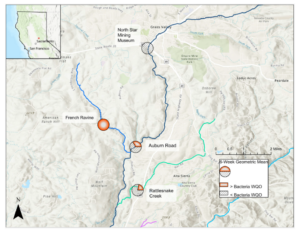
Wolf Creek and its tributary French Ravine are considered “impaired waters” by the Clean Water Act due to contamination with fecal bacteria, but WCCA is working with state and local partners to help solve this problem.

When neighbors of WCCA’s Peabody Creek habitat restoration site contacted us this summer about a nearby sewer leak upstream from Grass Valley’s Condon Park, we contacted the City and will continue to follow up until the water is safe and healthy. Our similar advocacy a few years ago helped result in repairs to several leaking sewer lines.

In south county, when a WCCA water quality monitor noticed a new smell at her creek site this year, we notified the County and followed up to make sure the failed septic system was quickly remedied.

To help focus additional solutions on the bacteria sources responsible for the majority of pollution throughout the watershed, the State Water Board reached out to WCCA last year for recommended locations for collecting creek water samples, based on our 20 years of creek monitoring. They then analyzed the DNA of fecal bacteria found in Wolf Creek and several tributary streams.

The DNA results published this year identify ruminants (grazing animals such as cattle, sheep, goats, and deer) as the source of the vast majority of fecal bacteria occurring south of downtown Grass Valley.

WCCA is thus beginning to reach out to the agricultural community to discuss win-win opportunities to reduce ruminant bacteria in the creek, while continuing our advocacy and collaboration with the City and County for solutions to sewer and septic leaks.

In the watershed maps above, circles with red and gray “pie” portions show what portion of the summer had unhealthy levels of bacteria at the creek locations tested by the State Water Board for DNA. The Wolf Creek Trail site lacked problematic bacteria, but every other tested site had unhealthy bacteria counts from grazing animals for 25-100% of the summer weeks. These sites include the downstream reaches of French Ravine, Rattlesnake Creek, South Wolf, Cherry Creek, and four locations along Wolf Creek. Maps excerpted from the Water Board’s recent report, available in its entirety at this link.